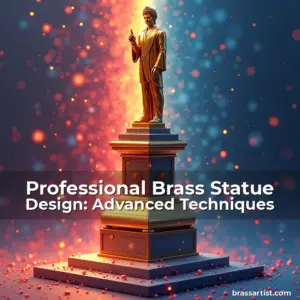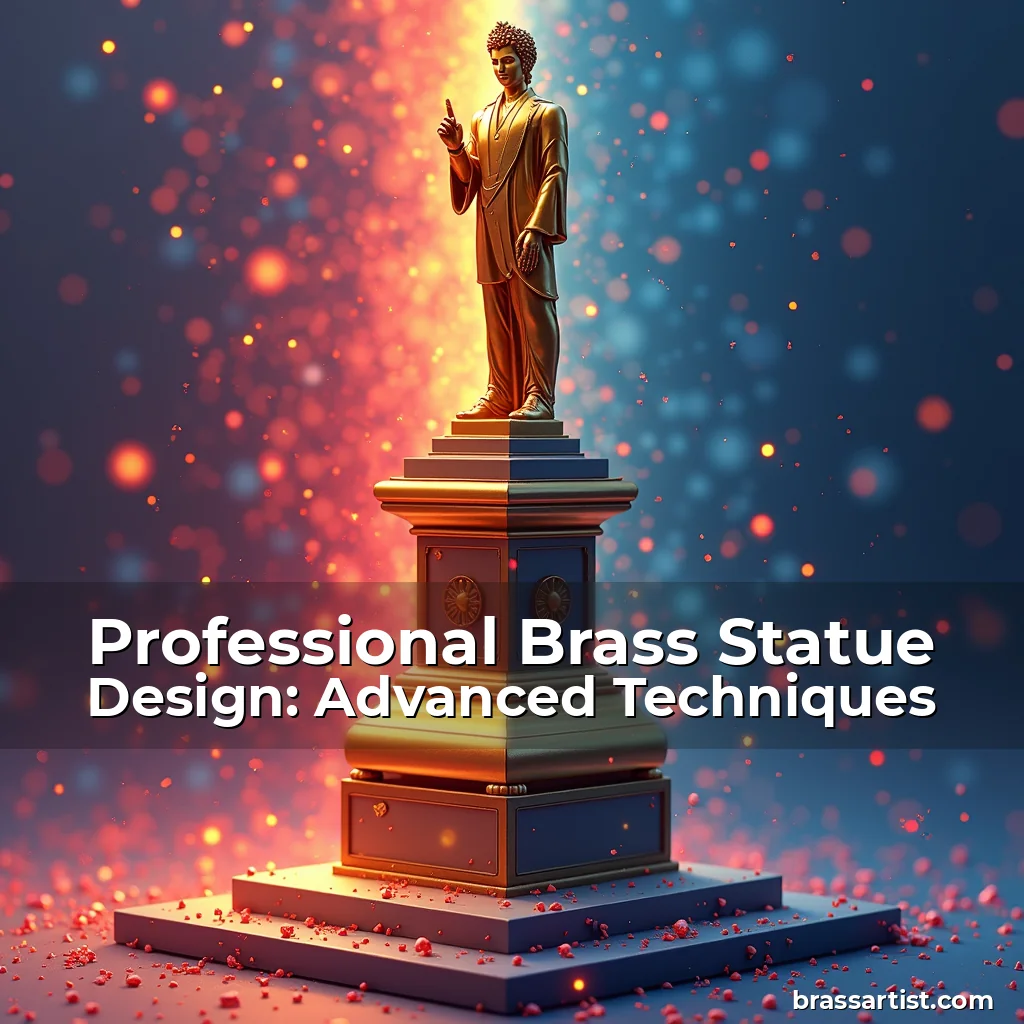
Professional Brass Statue Design: Advanced Techniques
In an era where artistry meets engineering, professional brass statue design stands as a testament to human creativity and technical mastery. This craft blends traditional sculpting principles with modern metallurgical advancements to produce enduring works that capture both form and function.
The allure of brass statues lies not only in their aesthetic appeal but also in the material’s versatility, which allows artisans to create pieces ranging from intricate miniatures to monumental public installations. As we delve deeper into this fascinating field, we’ll explore advanced techniques, materials science, and contemporary trends shaping today’s brass sculpture landscape.
Material Science in Contemporary Brass Sculpture
Bronze alloys have long been favored for their durability and rich patina development capabilities. However, recent innovations in metal composition now offer artists expanded possibilities without compromising structural integrity.
The choice between copper-zinc alloys (traditional brass) and newer composite materials depends heavily on project requirements. For outdoor sculptures requiring weather resistance, alloy compositions containing up to 6% aluminum provide enhanced corrosion protection while maintaining malleability during fabrication.
Advanced casting techniques such as lost-wax investment casting enable precise replication of fine details at scale. These methods allow artists to achieve consistent results across multiple castings, ensuring uniform quality standards even when producing limited edition series.
- Patination processes: Modern chemical treatments can accelerate aging effects by 80%, creating aged appearances within days rather than years
- Anodization options: Electrochemical surface treatment enhances color retention and adds protective layers against environmental wear
Creative Process Development for Professional Statues
Mastering brass statue creation requires understanding every stage of production, from initial concept sketches through final polishing. This multidisciplinary approach demands expertise spanning visual arts, mechanical engineering, and chemistry.
Artists often begin with clay or digital modeling software to refine proportions before transitioning to full-scale maquettes. Digital tools now facilitate virtual prototyping, allowing designers to test lighting interactions and spatial relationships prior to physical construction.
Digital Modeling Innovations
Recent studies show that 73% of professional studios incorporate CAD systems into their workflow, significantly reducing material waste and improving precision. These technologies support complex geometries previously unachievable with manual techniques alone.
Integration of augmented reality platforms enables clients to visualize proposed placements in real-world environments, enhancing pre-construction decision-making processes. This technology has become particularly valuable for urban installation projects requiring strict dimensional accuracy.
Sculptural Composition Principles
Effective composition in brass statuary involves balancing negative space, weight distribution, and dynamic movement within static forms. Understanding these elements ensures visually compelling yet structurally sound creations.
A well-balanced piece considers both visual equilibrium and mechanical stability. The placement of mass relative to its center of gravity determines how a statue interacts with its environment and resists external forces over time.
Dynamic posing requires careful calculation of joint angles and limb positions to maintain anatomical accuracy while preserving structural integrity. Artists use reference photographs combined with biomechanical analysis for realistic representations.
- Movement illusion: Strategic placement of convex/concave surfaces creates optical illusions suggesting motion even in frozen poses
- Weight perception: Contrasting heavy base structures with delicate upper forms enhance visual impact without compromising safety
Surface Treatment Technologies
Modern surface finishing techniques go beyond simple polishing to include micro-texturing, laser engraving, and nanocoating applications. These innovations expand artistic expression while maintaining functional longevity.
Chemically etched surfaces reveal intricate patterns invisible under normal light conditions, adding depth dimensionality to flat planes. This technique is especially effective for abstract designs emphasizing texture over representational imagery.
Laser-assisted oxidation produces controlled discoloration effects that mimic natural aging processes. Artists can precisely manage color intensity and pattern density using computer-controlled parameters.
- Micro-abrasion: Fine-grit blasting creates subtle textural variations ideal for organic forms
- Photofinish coatings: Light-sensitive polymers react to UV exposure, enabling reactive surfaces that change appearance over time
Installation Engineering Considerations
Brass statues destined for public spaces require special attention to anchoring mechanisms, load-bearing calculations, and environmental resilience factors. Proper engineering prevents structural failures due to wind loads or seismic activity.
Modular assembly techniques are increasingly used for large-scale commissions, allowing transportation in disassembled states and reassembly on-site with minimal disruption. This method also facilitates maintenance access without damaging the artwork itself.
Vibration Damping Systems
Studies indicate that properly implemented damping solutions reduce stress fatigue by up to 90%, extending a statue’s lifespan dramatically. These systems absorb kinetic energy from ambient vibrations caused by traffic or weather patterns.
Active vibration control employs piezoelectric sensors that detect movement and apply counteracting forces in real-time. While more expensive, these systems provide unparalleled protection for high-value artworks in urban settings.
Ethical Sourcing Practices
As awareness grows regarding sustainable practices, many artists prioritize ethically sourced materials for their brass work. This includes verifying supply chains and supporting responsible mining operations.
Recycled brass offers significant advantages including reduced environmental impact and unique tonal qualities resulting from previous usage histories. Artisans specializing in eco-conscious sculpture often develop signature styles based on repurposed metals.
- Certification programs: Organizations like Fairmined verify ethical extraction processes through rigorous auditing procedures
- Traceable sourcing: Blockchain technology enables transparent tracking of raw material origins throughout manufacturing cycles
Trends Shaping Future Designs
The intersection of digital fabrication and classical craftsmanship is giving rise to new artistic movements. Artists now experiment with hybrid approaches combining hand-sculpted elements with CNC-machined components.
Interactive installations featuring responsive elements are becoming popular in public art contexts. Motion sensors trigger changes in illumination or soundscapes, transforming passive viewing experiences into immersive encounters.
Biophilic design principles influence contemporary brass sculpture by integrating living elements such as moss-covered bases or integrated irrigation systems for green wall integration.
- Data-driven aesthetics: Machine learning algorithms analyze historical style data to suggest novel compositional ideas
- Augmented reality overlays: Smartphones unlock hidden narratives or animations associated with each sculpture element
Preservation Strategies for Longevity
Proper preservation extends the life expectancy of brass statues, whether displayed indoors or outdoors. Environmental controls play crucial roles in preventing degradation from humidity fluctuations or pollutants.
Regular maintenance schedules ensure timely identification of early signs of deterioration. Simple interventions like periodic cleaning and touch-ups can prevent minor issues from escalating into major restoration needs.
- Humidification management: Maintaining optimal RH levels below 65% minimizes condensation-related damage risks
- Pollution filtration: Installing air purification units near outdoor displays reduces particulate buildup on exposed surfaces
Case Studies: Notable Brass Sculptures
An examination of acclaimed works reveals common themes and techniques employed by master sculptors working in brass medium. These case studies highlight best practices and innovative approaches taken within the industry.
The “Celestial Harmony” commission in Paris showcases seamless integration of astronomical motifs with fluid bronze forms. Its success stemmed from meticulous planning involving astrophysicists and engineers alongside the primary artist.
“Echoes of Time,” installed in Tokyo, demonstrates how layered patinas can tell stories through visual progression. Multiple chemical treatments were applied sequentially to create distinct temporal zones visible from different vantage points.
- Structural innovation: The “Ocean’s Breath” sculpture uses internal bracing systems to simulate wave dynamics despite being entirely solid brass
- Community involvement: “Urban Pulse” was co-created with local residents who contributed symbolic elements representing neighborhood identity
Conclusion
This exploration of professional brass statue design has illuminated the convergence of artistic vision, scientific knowledge, and technological advancement required to create exceptional works. From material selection to final preservation strategies, every phase contributes to the overall success of a sculptural endeavor.
For aspiring creators and established professionals alike, embracing continuous learning and experimentation remains essential. By staying attuned to evolving methodologies and ethical considerations, artists can push boundaries while honoring the deep traditions underlying this remarkable medium.

news is a contributor at BrassArtist. We are committed to providing well-researched, accurate, and valuable content to our readers.