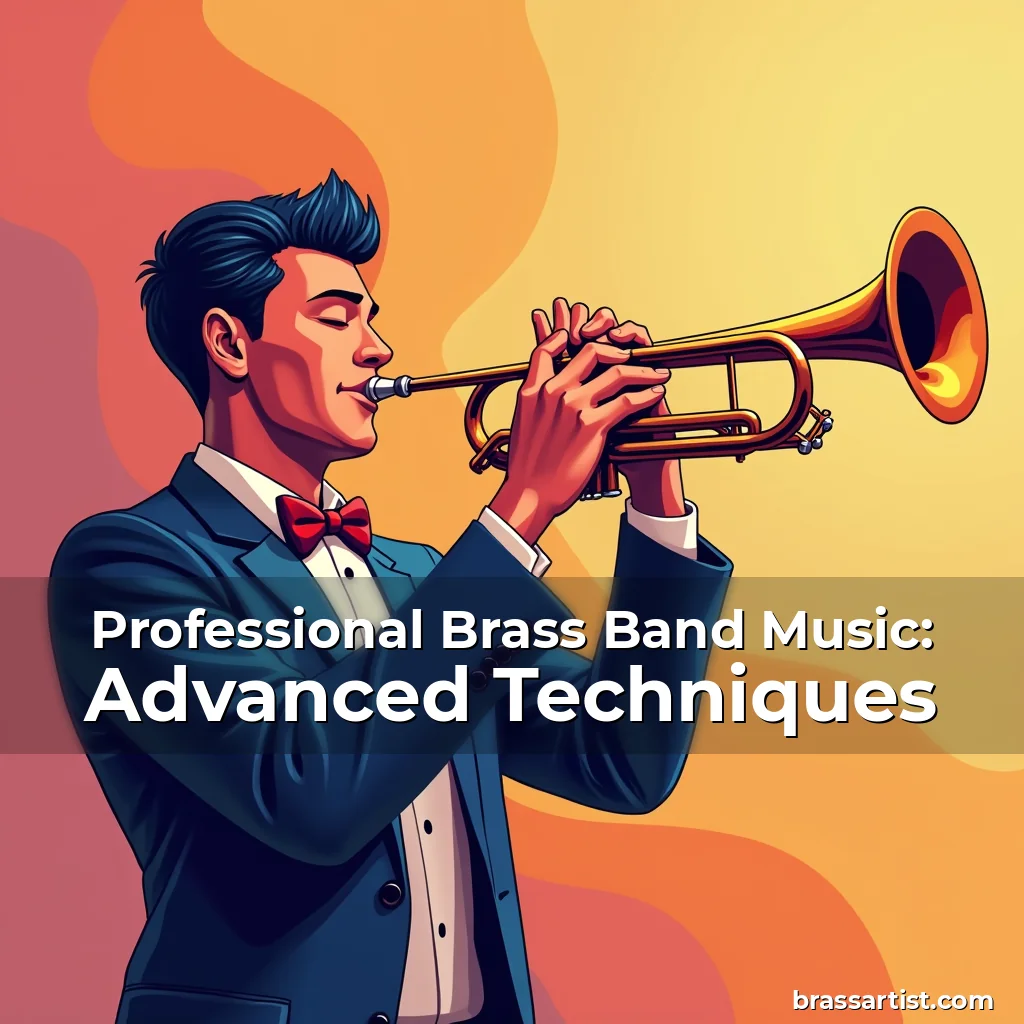
Professional Brass Band Music: Advanced Techniques
The world of professional brass band music is rich with complexity, offering both challenges and rewards for seasoned musicians. As an artist immersed in this genre, mastering advanced techniques can elevate your performance from good to exceptional. This guide explores these intricate methods that define elite brass band artistry.
Whether you’re refining your technique or preparing for a high-stakes competition, understanding the nuances of professional brass band music opens new doors of expression. These advanced approaches not only enhance technical proficiency but also deepen musical interpretation at every level of skill development.
Mastering Breath Control for Dynamic Expression
Breath control remains the cornerstone of professional brass playing. Elite performers understand that consistent air support enables greater dynamic range and expressive nuance. This foundational element underpins everything from soft pianissimo passages to powerful fortissimo bursts.
Musicians aiming for excellence must develop diaphragmatic breathing patterns specifically tailored to extended passages. Unlike casual players who rely on shallow chest breathing, professionals employ controlled abdominal engagement to sustain long notes without fatigue. This technique allows for seamless transitions between dynamics while maintaining tonal consistency.
- Airflow management: Proper breath direction ensures efficient use of lung capacity by aligning airflow with natural anatomical pathways
- Pacing exercises: Gradual increases in note duration help build endurance for sustained performances
- Vocalization drills: Sustained humming or singing develops muscle memory for consistent air pressure regulation
Advanced players often incorporate resistance training using devices like the Embouchure Trainer or metronome-assisted breathing exercises. These tools help establish precise timing and steady air streams essential for complex musical phrasing. Regular practice with such equipment builds the stamina required for demanding repertoire.
The relationship between breath control and articulation cannot be overstated. When combined with rhythmic precision, controlled exhalation becomes the foundation for articulate phrasing across registers. Musicians who master this synergy achieve unparalleled expressiveness in their interpretations.
In competitive settings, judges often assess breath control through sudden dynamic shifts and sustained tones. Developing this ability allows performers to execute challenging passages with confidence and clarity, leaving lasting impressions on audiences and adjudicators alike.
Refining Tone Quality Through Instrument Mastery
Tone quality distinguishes great brass players from merely competent ones. In professional ensembles, each instrument contributes uniquely to the overall sound palette. Mastering your particular brass instrument’s capabilities unlocks new dimensions of artistic expression.
For trumpeters, cultivating a warm yet bright timbre requires careful embouchure adjustments. French horn players must balance resonance with agility, while tubists focus on developing a full-bodied bass presence that anchors the ensemble. Each instrument demands its own specialized approach to tone refinement.
Regular maintenance routines are crucial for preserving optimal tone production. Ensuring valves function smoothly, slides move freely, and mouthpieces remain properly aligned maintains the integrity of your instrument’s voice. Neglecting routine care can significantly impact tonal quality during critical moments.
Players should experiment with different mouthpiece cup depths and rim widths to find the ideal configuration for their individual physiology. While standard mouthpieces work well for beginners, professionals often customize their gear to match personal playing characteristics and stylistic preferences.
The pursuit of superior tone involves daily focused practice sessions. Targeted exercises focusing on overtones, harmonic series exploration, and register transitions help expand tonal possibilities. These activities strengthen the intrinsic muscles involved in sound production.
Cultivating a consistent attack is another key aspect of tone refinement. Whether executing staccato articulations or legato lines, the initial contact between lips and mouthpiece sets the tone’s character. Practicing various tonguing techniques enhances versatility across diverse musical styles.
Listening critically to recordings of master performers provides invaluable insight into achieving refined tone qualities. Analyzing how experts shape their sounds offers practical examples that can inform your own development as a musician.
Developing Articulation Precision Across Registers
Articulation precision separates average performances from virtuosic displays. Professional brass bands demand exacting standards when it comes to clear attacks, smooth transitions, and rhythmic accuracy across all registers.
Each brass instrument has distinct articulatory requirements based on its physical construction. For example, trombonists working in the upper register need to adjust their embouchure tension differently than those playing in the lower register. Understanding these nuances improves overall performance quality.
Practicing scales and arpeggios with varying articulation types helps build muscular memory for accurate execution. Starting with simple dotted rhythms before progressing to complex syncopations develops coordination between air support and tongue placement.
Daily articulation drills should include exercises targeting both fast passage work and lyrical melodies. Maintaining evenness across dynamic levels is particularly important for ensemble cohesion, especially during delicate harmonies requiring subtle articulations.
Recording self-practice sessions provides objective feedback on articulation accuracy. Reviewing playback helps identify areas needing improvement, such as inconsistent slurring or abrupt accents that disrupt musical flow.
Collaborating with fellow musicians fosters mutual growth in articulation skills. Ensemble rehearsals expose players to different interpretive approaches, encouraging experimentation with alternative ways of shaping phrases.
Professionals often incorporate metronome-based articulation exercises to refine rhythmic precision. Gradually increasing tempo while maintaining clean articulation builds the resilience needed for high-speed passages in competitive settings.
Enhancing Intonation Accuracy in Ensemble Settings
Intonation accuracy forms the bedrock of successful brass band performances. In close-knit ensembles where instruments blend seamlessly, even minor tuning discrepancies become glaringly apparent. Achieving perfect pitch alignment requires constant awareness and adjustment.
Professional musicians utilize tuners extensively during rehearsals and performances. Digital chromatic tuners provide immediate visual feedback, helping players make real-time corrections. However, true mastery lies in internalizing correct intonational relationships rather than relying solely on external aids.
Scales and intervals form the basis for ear-training exercises aimed at improving relative pitch perception. Daily drilling with intervallic progressions strengthens the auditory faculties necessary for quick adjustments during live performances.
Understanding the acoustics of performance spaces plays a vital role in maintaining proper intonation. Players must adapt their playing style to account for reverberation times, room size, and other environmental factors affecting sound projection.
Ensemble members engage in regular listening sessions to cultivate collective intonational awareness. This shared responsibility encourages proactive communication among musicians regarding pitch issues encountered during rehearsals.
Some modern brass bands incorporate electronic tuning systems that monitor group intonation in real time. These innovations allow conductors to address problematic passages promptly, ensuring consistently high-quality sound output.
Despite technological advancements, traditional tuning practices remain relevant. Learning to tune by ear develops the sensitivity required for nuanced micro-adjustments that digital tools sometimes overlook.
Crafting Effective Phrasing for Expressive Performances
Phrasing defines the emotional contour of any musical piece. In professional brass bands, effective phrasing transforms technically proficient playing into compelling storytelling. It involves thoughtful shaping of melodic lines and strategic emphasis within musical structures.
Players must analyze score markings meticulously to understand composer intentions behind phrasing instructions. Dynamics, slur marks, and textural indications all contribute to interpreting the intended narrative arc of a composition.
Experimenting with rubato (flexible tempo) in appropriate contexts adds depth to interpretations. Careful application of this technique avoids disrupting ensemble cohesion while enhancing dramatic effect when used judiciously.
Focusing on phrase beginnings and endings cultivates natural musical gestures. A well-shaped opening prepares listeners for what follows, while a purposeful conclusion leaves a satisfying impression that resonates beyond the final note.
Studying recordings of renowned brass bands provides practical models for expressive phrasing. Observing how expert performers navigate structural changes gives insight into creating meaningful musical narratives.
Internalizing musical terminology related to phrasing—such as “crescendo,” “decrescendo,” and “sforzando”—enhances comprehension of compositional intent. Accurate implementation of these terms elevates overall interpretative quality.
Engaging in solo studies alongside ensemble work refines individual phrasing abilities. Isolating parts allows for focused attention on line-shaping, which translates naturally into improved group performances when reintegrated with others.
Building Musical Memory for Confident Performance
Strong musical memory is indispensable for professional brass musicians performing complex repertoires. Memorization techniques go beyond rote learning; they involve deep conceptual understanding of musical material.
Visual association methods link musical elements with mental imagery, reinforcing memory retention. Mapping out harmonic progressions visually helps internalize structural patterns inherent in compositions.
Chunking strategies break down lengthy passages into manageable segments. Focusing on thematic units rather than isolated notes creates stronger cognitive connections that facilitate recall under performance conditions.
Rhythmic anchoring serves as an effective memorization aid. Establishing strong pulse points within a piece provides stability, allowing for easier retrieval of surrounding musical content during performances.
Verbal reinforcement complements visual and kinesthetic learning modalities. Singing or reciting solfège syllables associated with specific passages strengthens neural pathways linked to musical memory formation.
Memory palaces—a mnemonic device involving spatial associations—are increasingly adopted by serious musicians seeking reliable recall mechanisms. This technique organizes information geographically within imaginary locations.
Consistent review schedules prevent forgetting curves from undermining preparation efforts. Spaced repetition methods ensure knowledge retention over time through strategically timed refreshment cycles.
Confidence in memorized material stems from thorough rehearsal processes that simulate actual performance scenarios. Simulating stage environments during practice builds psychological resilience against unexpected situations.
Improvisation Skills for Adaptive Interpretation
While classical brass band traditions emphasize strict adherence to written scores, contemporary professionals benefit greatly from improvisational prowess. Adaptability in spontaneous musical creation enriches performances with fresh perspectives.
Improv exercises begin with simple scale-based variations that gradually increase in complexity. Building melodic ideas around established chord progressions lays groundwork for structured improvisation.
Call-and-response drills foster interactive creativity between musicians. Engaging in reciprocal exchanges sharpens responsiveness to others’ musical statements, promoting cohesive ensemble interactions.
Transcribing jazz solos provides insight into idiomatic improvisational language applicable to brass instruments. Studying how masters manipulate available resources inspires innovative approaches to spontaneous creation.
Modal interchange experiments encourage exploration beyond conventional tonal frameworks. Investigating non-diatonic scales expands harmonic vocabulary useful for inventive improvisation.
Performance simulations under time constraints condition reflexes required for authentic improvisation. Rehearsing in low-pressure environments builds comfort with uncertainty inherent in spontaneous musical dialogue.
Group jam sessions offer practical experience applying improvisation principles in collaborative settings. Navigating shifting roles within ensembles hones interpersonal musical communication skills essential for adaptive performance.
Documenting improvised passages through recording facilitates analysis of strengths and weaknesses. Reviewing playback highlights areas for further development while celebrating successful creative moments.
Stage Presence and Communication in Brass Ensembles
Effective stage presence elevates musical delivery by establishing rapport with audiences. Non-verbal cues such as posture, eye contact, and facial expressions convey commitment to the performance.
Establishing clear sightlines within the ensemble promotes visual communication among musicians. Consistent positioning allows for unobstructed observation of conducting gestures and peer expressions.
Gestural synchronicity reinforces ensemble unity. Coordinated movements create visual continuity that mirrors musical cohesion, strengthening the connection between performer and listener.
Cultural sensitivity informs choices regarding audience interaction. Respecting regional customs regarding applause and audience behavior ensures respectful presentations in varied performance venues.
Personal branding elements such as attire and accessories reflect professionalism while expressing individuality. Thoughtfully curated stage appearances complement musical identities without overshadowing them.
Pre-show rituals help center musicians mentally and physically. Routine preparations reduce anxiety, allowing full concentration on impending performances.
Post-performance interactions with audiences foster community engagement. Meaningful connections extend beyond concerts themselves, building lasting relationships with supporters of the arts.
Utilizing Technology for Enhanced Practice Routines
Modern technology offers unprecedented opportunities for brass musicians seeking to optimize their practice regimens. Digital tools provide flexible solutions for tracking progress and addressing weaknesses systematically.
Metronome applications enable precise rhythm training through adjustable tempos and customizable subdivisions. Real-time audio feedback helps maintain consistent pacing across different difficulty levels.
Smartphone apps facilitate remote collaboration with teachers and peers. Video call features allow for real-time instruction and critique, bridging geographical distances for continued mentorship.
Audio recording software enables detailed analysis of practice sessions. Listening back to recorded performances reveals subtleties that may escape notice during immediate play-throughs.
Data analytics tools track measurable improvements over time. Graphical representations of progress motivate continued effort while identifying plateaus requiring additional focus.
Virtual reality platforms create immersive practice environments. These simulated spaces allow for scenario-specific training that replicates concert hall pressures safely.
Online communities connect musicians worldwide for shared learning experiences. Participating in virtual workshops exposes practitioners to diverse pedagogical approaches beneficial for continuous growth.
Educational software packages deliver structured curricula adaptable to individual needs. Customizable lesson plans accommodate different skill levels while providing targeted guidance toward specific goals.
Conclusion
Mastering advanced techniques in professional brass band music demands dedication, patience, and a willingness to explore beyond conventional boundaries. By integrating these methodologies into regular practice routines, musicians can continually evolve their craft.
The journey towards excellence involves embracing both traditional wisdom and modern innovations. Combining time-honored principles with cutting-edge technologies empowers brass artists to reach new heights in their musical pursuits.

news is a contributor at BrassArtist. We are committed to providing well-researched, accurate, and valuable content to our readers.