Brass Music Festivals for Small Spaces
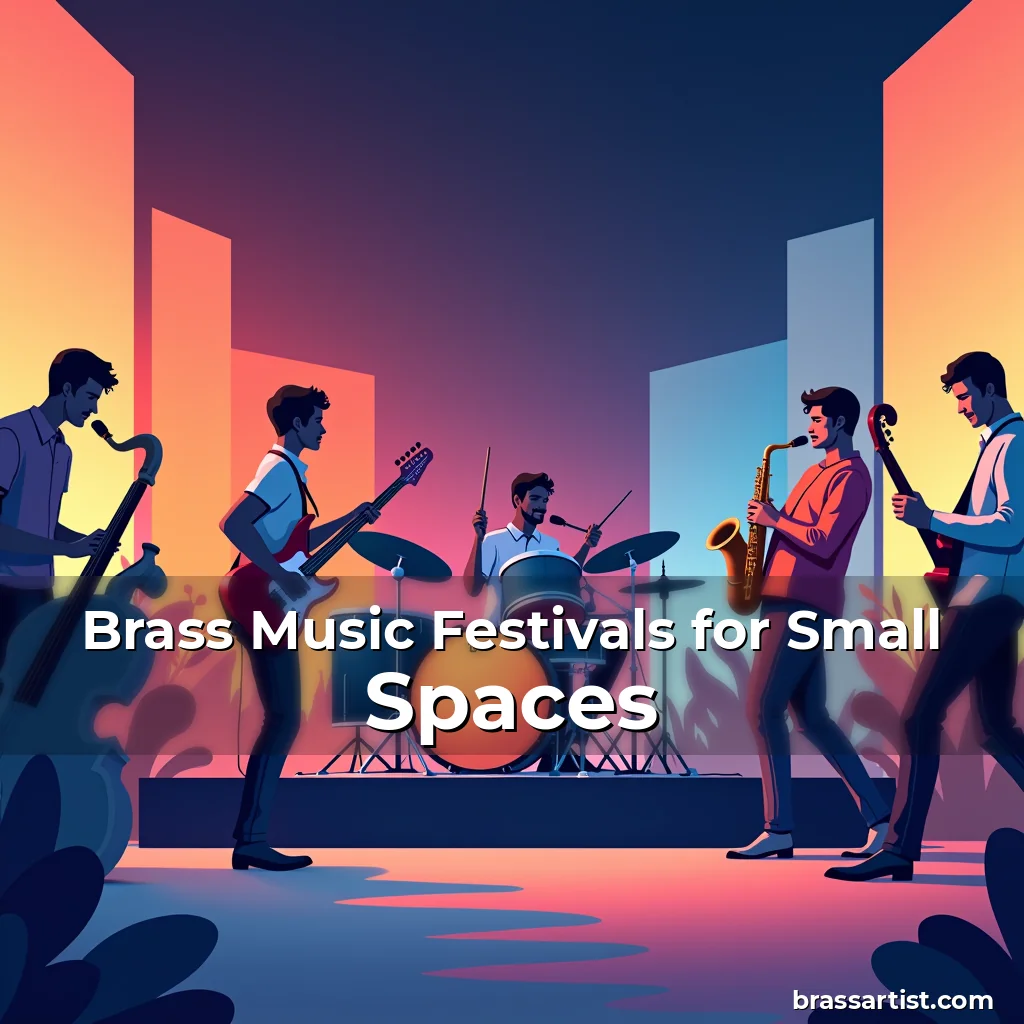
The Resonant Rhythms of Brass Music Festivals in Compact Venues
In an era where space constraints often limit artistic expression, brass music festivals have found innovative ways to thrive within smaller venues without compromising their grandeur. These events celebrate the rich heritage of brass instruments while adapting to modern urban landscapes. From intimate jazz clubs to repurposed warehouses, the spirit of brass music lives on through carefully curated performances.
What sets these compact festival experiences apart is their ability to transform limited spaces into vibrant musical ecosystems. The acoustics of such environments are meticulously considered by event organizers who understand that small settings can enhance rather than hinder performance quality. This approach has led to a growing trend of immersive acoustic experiences that challenge traditional notions of concert hall requirements.
Evolution of Brass Festivals in Urban Landscapes
The transformation from grand concert halls to smaller venues represents a significant shift in how brass music is experienced today. As cities become increasingly dense, traditional large-scale festivals face logistical challenges that make them less feasible in many metropolitan areas. This reality has spurred creativity among event planners seeking alternative solutions.
Modern brass festivals now embrace the intimacy of small venues as a feature rather than a limitation. Acoustic engineers work closely with venue owners to optimize sound distribution in spaces ranging from underground lofts to converted industrial sites. These adaptations allow for a more personal connection between performers and audiences that larger venues sometimes lack.
The evolution reflects changing audience expectations and technological advancements. High-fidelity audio systems enable clear sound projection even in confined areas, making it possible to maintain the richness of brass tones without overwhelming participants. This innovation has opened new possibilities for both established musicians and emerging talent alike.
Notable examples include the annual Brass in the City Festival held in a former printing press building downtown. Here, the exposed brick walls create natural reverberation that enhances the warmth of brass instrumentation. Similarly, the Loft Sessions series transforms abandoned factory floors into dynamic performance spaces where musicians interact directly with attendees.
- Acoustic optimization: Soundproofing techniques ensure clarity without amplification, preserving the organic qualities of live brass performances.
- Venue versatility: Converted warehouses offer flexible layouts that accommodate various seating configurations and stage setups.
- Immersive experience: Proximity allows audiences to appreciate subtle tonal variations and technical nuances not always evident in larger venues.
- Economic viability: Lower rental costs compared to convention centers make smaller venues more accessible for independent ensembles and soloists.
Crafting Unique Experiences Through Venue Selection
Selecting appropriate venues involves careful consideration of several factors beyond mere size limitations. Architects and designers collaborate with music experts to ensure that spatial characteristics complement the nature of brass instrumentation. This interdisciplinary approach results in environments specifically tailored to amplify the best qualities of each instrument.
Venue selection also plays a crucial role in shaping the overall atmosphere of the festival. A historic ballroom might provide a nostalgic setting for vintage brass bands, whereas a sleek glass atrium could be ideal for contemporary compositions. The choice influences not only the auditory but also the visual aspects of the experience.
Architectural Considerations
Auditorium design principles remain relevant despite reduced scale. Echo patterns must be controlled to prevent excessive reverberation that could distort complex brass harmonies. At the same time, sufficient early reflections help maintain clarity during fast-paced passages typical of brass repertoire.
Studies show that optimal sound dispersion occurs when ceiling heights range between eight to ten feet above floor level. This measurement ensures adequate air volume for sound waves to travel before encountering absorbing surfaces. Such calculations guide architects in creating functional yet aesthetically pleasing spaces.
Materials used in construction significantly impact acoustics. Hardwood flooring combined with strategic placement of suspended ceilings helps balance resonance while maintaining warmth in low-frequency ranges. In contrast, carpeted surfaces may dampen vibrations too much for certain types of brass arrangements.
Curating Diverse Programming for Smaller Audiences
Festival programming takes on different dimensions when adapted for smaller crowds. Curators must consider not only the musical diversity but also the interactive potential of each performance. Unlike mass gatherings at stadium-sized concerts, close-quarters events encourage spontaneous engagement between musicians and listeners.
This proximity fosters opportunities for informal Q&A sessions after performances or impromptu jam sessions featuring audience members. Such interactions enrich the festival experience by transforming passive spectators into active contributors to the musical narrative.
Programming decisions also reflect local cultural preferences and historical contexts. Events often incorporate regional folk traditions alongside classical works, creating hybrid forms that resonate deeply with community members. This approach strengthens the bond between performers and their audiences.
Diversity extends beyond genre choices; gender representation in brass ensembles receives special attention at many festivals. Initiatives aimed at increasing participation from underrepresented groups contribute to a richer tapestry of sounds and perspectives within the brass music scene.
Scholarship programs and mentorship opportunities further support inclusivity efforts. By providing financial assistance and professional guidance, these initiatives help cultivate future generations of brass musicians across diverse backgrounds.
Technological Innovations Enhancing Performance Quality
Advancements in digital technology continue to reshape how brass music is performed and perceived in constrained spaces. Modern recording equipment enables high-quality captures of every nuance produced by brass instruments, ensuring that no detail goes unnoticed during playback.
Live streaming capabilities expand access to these specialized events, allowing remote audiences to participate virtually. Real-time video feeds paired with multi-channel audio delivery create an almost holographic presence that bridges geographical distances effectively.
Interactive apps developed for festivalgoers provide additional layers of engagement. Features like real-time score visualization or augmented reality overlays help attendees better understand the complexities behind each performance.
Data analytics tools assist curators in refining programming based on audience feedback collected through mobile applications. Insights gained from user behavior patterns inform decisions regarding future lineups and scheduling adjustments.
Haptic feedback devices represent another frontier being explored. These wearable technologies transmit physical sensations corresponding to vibrational frequencies generated by brass instruments, offering tactile interpretations of otherwise intangible musical elements.
Nurturing Talent Through Specialized Workshops
Beyond performance showcases, brass festivals serve as vital incubators for developing artists. Structured workshops provide hands-on learning opportunities that supplement formal education received in conservatories and universities. These intensive sessions cover everything from breathing techniques to ensemble dynamics.
Mentorship components pair aspiring musicians with seasoned professionals who share industry knowledge and practical wisdom acquired over years of performance. Personalized coaching addresses individual needs while fostering collaborative skills essential for group playing.
Workshop formats vary depending on participant levels, ranging from beginner-friendly introductions to advanced masterclasses focused on specific techniques. Topics frequently addressed include articulation styles, valve coordination, and mute usage subtleties.
Tech-integrated teaching methods utilize virtual reality simulations to demonstrate proper embouchure formation or correct finger positioning on valves. These visual aids accelerate comprehension processes compared to purely verbal instruction alone.
Collaborative projects encourage cross-disciplinary experimentation. Musicians might team up with dancers or visual artists to explore unconventional presentation formats that push creative boundaries beyond conventional concert settings.
Community Engagement Strategies for Sustainable Growth
Lasting success depends heavily on cultivating strong relationships within host communities. Local partnerships with schools, libraries, and other arts organizations facilitate broader outreach efforts that extend far beyond direct ticket sales. These collaborations build long-term goodwill essential for continued support.
Youth engagement programs target younger demographics through school visits and summer camps focusing on basic brass fundamentals. By instilling appreciation early, festivals aim to grow future audiences organically rather than relying solely on passive attendance figures.
Volunteer networks composed of students, retired educators, and passionate enthusiasts play pivotal roles in organizing events efficiently. Their contributions reduce operational burdens on core staff while fostering deeper connections between organizers and participants.
Public relations campaigns highlight the economic benefits brought by festivals, including increased foot traffic for nearby businesses and enhanced property values due to improved neighborhood aesthetics. Quantifiable data supporting these claims strengthens arguments made to municipal authorities seeking permits or funding.
Environmental sustainability becomes another key concern as events strive towards carbon neutrality goals. Waste reduction strategies coupled with renewable energy sources set benchmarks others aspire to emulate within the performing arts sector.
Preserving Heritage While Embracing Innovation
Tradition serves as both foundation and inspiration for contemporary brass festivals. Historical performances are preserved digitally using archival recordings that document stylistic evolutions over decades. These resources become invaluable references for modern interpreters striving to maintain authenticity amidst experimentation.
Heritage preservation extends beyond mere documentation; it includes reviving forgotten pieces that showcase lesser-known facets of brass literature. Dedicated research teams scour obscure manuscripts and unpublished scores to uncover hidden gems worthy of rediscovery.
While honoring tradition, festivals actively promote experimental approaches that redefine what brass music can achieve sonically. Electronic manipulation of traditional instruments creates novel textures previously unattainable through conventional means alone.
Such forward-thinking initiatives attract multidisciplinary collaborators from fields outside classical music circles. Fusion projects involving hip-hop producers or electronic composers generate exciting new sonic landscapes rooted in ancestral traditions yet propelled toward futuristic directions.
Balance remains critical between respecting past achievements and pushing artistic frontiers. Successful festivals navigate this duality skillfully, ensuring neither aspect overshadows the other but instead complements its counterpart in meaningful ways.
Challenges and Opportunities in Compact Event Planning
Despite numerous advantages, organizing successful brass festivals in smaller venues presents distinct challenges requiring thoughtful problem-solving. Limited square footage necessitates creative storage solutions for instruments, sheet music, and staging materials typically managed in expansive facilities.
Logistical complexities arise from coordinating multiple acts within tight schedules imposed by venue availability windows. Efficient use of time requires meticulous planning to avoid delays that could disrupt flow and diminish attendee satisfaction.
Sound management becomes particularly intricate given the need to preserve acoustic integrity without excessive reinforcement. Finding the right equilibrium between natural resonance and artificial augmentation demands expertise in both musical theory and engineering science.
Weather-related disruptions pose risks when outdoor spaces are incorporated into festival plans. Contingency measures involving indoor alternatives must be prepared well ahead of any potential inclement conditions.
However, these obstacles also present unique opportunities. Challenges related to space constraints foster ingenuity resulting in groundbreaking solutions applicable beyond the realm of brass festivals themselves. Many innovations initially tested here find wider adoption elsewhere within the entertainment industry.
Conclusion
Brass music festivals in compact venues represent a thriving intersection of artistry and adaptability. They prove that exceptional musical experiences do not require vast infrastructures but rather imaginative thinking applied creatively to available resources.
For artists and professionals engaged in this field, understanding the intricacies involved in crafting such events offers profound insights into redefining conventional paradigms surrounding live performance spaces. Embracing these challenges opens doors to unprecedented creative possibilities waiting to be explored.