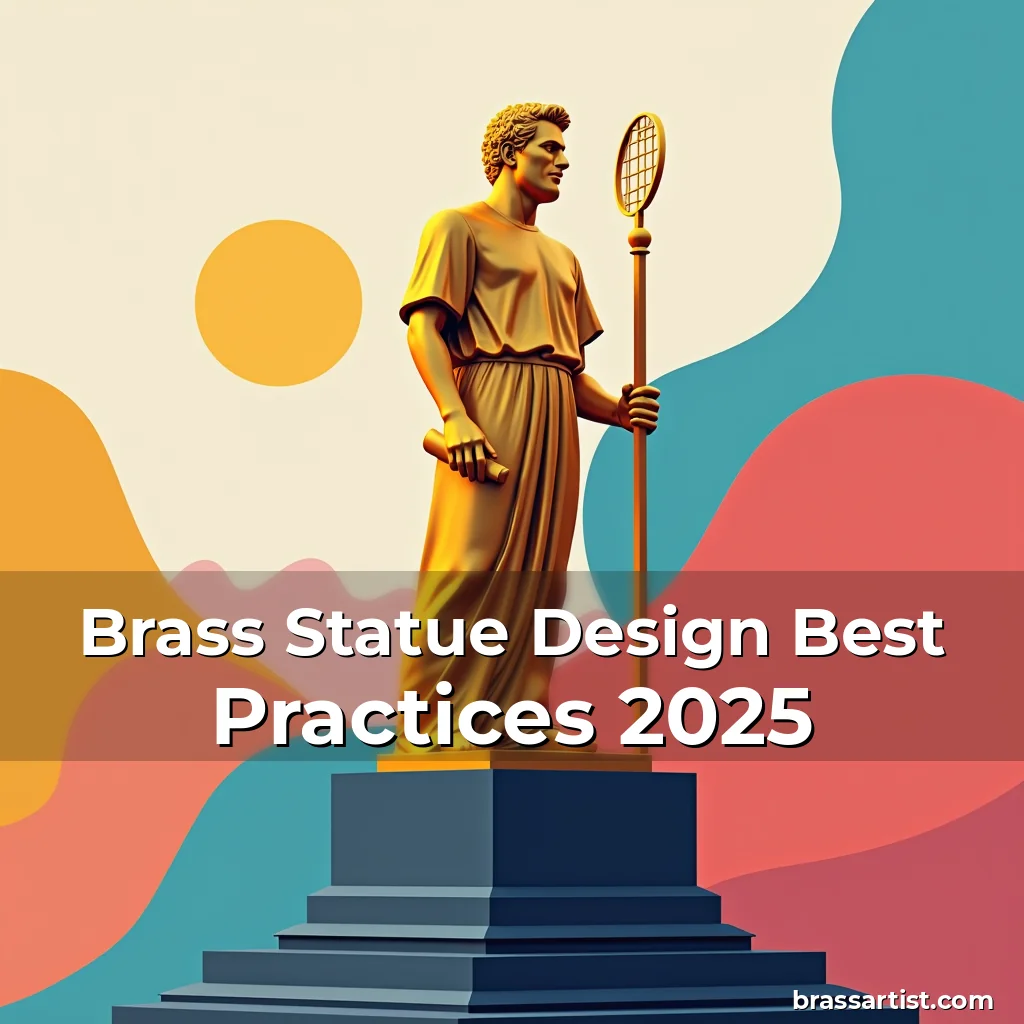
Brass Statue Design Best Practices 2025
In an era where artistic expression is increasingly valued across industries, brass statues have emerged as both functional art pieces and symbols of prestige. From public installations to private collections, these sculptures demand meticulous attention to detail in their creation.
The evolution of brass statue design has been shaped by technological advancements and shifting aesthetic preferences. Modern designers now leverage digital modeling tools alongside traditional techniques to craft intricate forms that balance durability with visual appeal.
Fundamental Principles of Brass Sculpture Composition
A well-designed brass statue begins with a strong conceptual foundation rooted in proportion and spatial awareness. Artists must consider how each element contributes to the overall harmony of the piece while maintaining structural integrity.
Balance plays a critical role in ensuring stability and visual equilibrium. Whether working with abstract shapes or realistic figures, achieving dynamic tension between components enhances the sculpture’s presence without compromising its physical soundness.
Symmetry versus asymmetry decisions influence perception significantly. While symmetrical designs often convey orderliness, asymmetric arrangements can create compelling focal points through intentional imbalance.
- Proportional accuracy: Maintaining correct scale relationships prevents awkward distortions that could undermine credibility or beauty.
- Structural reinforcement: Internal supports may be necessary for complex compositions to prevent sagging over time.
Material properties also dictate compositional choices. The malleability of brass allows for fine detailing but requires careful handling during shaping processes to avoid unwanted deformation.
Mechanical Considerations in Brass Statuette Fabrication
Crafting high-quality brass statues involves understanding metallurgical characteristics that affect workability and longevity. Selecting appropriate alloys ensures optimal performance under various environmental conditions.
Different brass types offer distinct advantages depending on intended use cases. For example, C86500 naval bronze provides excellent corrosion resistance suitable for outdoor placements, whereas C36000 free-cutting brass excels in machinability for decorative elements.
Thermal expansion coefficients become crucial when designing joints or moving parts. Mismatched materials expanding at different rates can cause stress fractures unless carefully accounted for in engineering calculations.
Tool Selection and Machining Techniques
Contemporary workshops utilize CNC machining centers capable of producing highly precise geometries within tight tolerances. These systems allow for consistent replication of complex patterns across multiple units.
Laser cutting technology enables accurate slicing of sheet metal components before assembly. This method minimizes material waste compared to conventional shearing methods which often produce irregular edges requiring additional finishing steps.
Hand-forging remains popular among artisans seeking organic textures unachievable via automated means. Skilled craftsmen manipulate heated metal using hammers and anvils to achieve unique surface qualities not found in machine-made counterparts.
Data from industry reports indicate that hybrid approaches combining digital fabrication with manual refinement yield superior results in terms of both efficiency and aesthetic quality. Such integrations are becoming standard practice among professional studios worldwide.
Choosing between subtractive and additive manufacturing depends largely on desired outcome specifics. Milling operations remove excess material gradually until reaching final shape specifications, whereas 3D printing builds up layers incrementally according to CAD models.
Surface Treatment Methods for Enhanced Aesthetic Appeal
Finishing treatments play a vital role in determining how a completed brass statue interacts visually with its surroundings. Various polishing techniques bring out inherent luster while protective coatings extend lifespan against weathering effects.
Buffing wheels made from synthetic compounds effectively smooth surfaces after initial machining stages. Multiple passes with progressively finer abrasives help achieve mirror-like finishes prized by collectors and display curators alike.
Anodizing creates durable color films through electrochemical processes applied specifically to aluminum alloys rather than brass itself. However, specialized chemical baths exist that enable limited coloring options for copper-based metals including brass.
- Patinization: Controlled oxidation introduces aged patinas enhancing historical authenticity or stylistic contrast.
- Electroplating: Applying thin metallic layers improves wear resistance and allows integration with other precious metals for ornate embellishments.
Varnishes formulated for metal substrates provide UV protection essential for exterior applications exposed to direct sunlight. Proper application thickness determines effectiveness against atmospheric pollutants causing discoloration over time.
Design Trends Shaping Contemporary Brass Statue Creation
Modern trends reflect growing interest in minimalist aesthetics combined with sustainable practices. Clean lines and geometric simplifications dominate current exhibitions featuring brass sculptures in galleries around the world.
Recycled brass initiatives align with global sustainability goals by reducing raw material consumption. Studios adopting closed-loop production cycles report significant cost savings along with enhanced brand reputation associated with eco-conscious values.
Interactive installations incorporating motion sensors represent another emerging direction. These responsive artworks engage viewers physically transforming static objects into participatory experiences through light projections or mechanical movements triggered by proximity detection systems.
Integration of Smart Technologies
Some avant-garde creators embed microchips inside hollow cores allowing remote activation features such as programmable lighting sequences visible only under certain wavelengths of illumination.
Bluetooth connectivity facilitates mobile app control enabling personalized customization settings tailored to individual user preferences regarding brightness levels or animation speed parameters.
While still niche within mainstream sculptural communities, these technologically augmented pieces demonstrate potential future directions where artistry converges seamlessly with digital innovation capabilities previously unimaginable in classical mediums.
Industry surveys suggest increasing adoption rates among younger generations who grew up immersed in interactive media environments. Their familiarity with touchscreens and gesture recognition interfaces makes them natural advocates pushing boundaries beyond traditional craftsmanship limitations.
Artistic Inspiration Sources for Innovative Brass Sculptures
Exploring diverse cultural influences enriches creative output providing fresh perspectives on form language development. Ancient Egyptian motifs frequently resurface in modern reinterpretations emphasizing symbolic weight carried by ancient iconography.
Nature serves as endless source material offering lessons in biomimicry applicable across numerous scales ranging from microscopic cellular structures observable under electron microscopy up to macroscopic plant growth patterns discernible through long-term observation periods.
Architectural landmarks inspire many contemporary works capturing essence of iconic buildings through stylized reductions focusing primarily on defining silhouettes rather than exact replicas preserving core identity without overwhelming detail overload.
- Historical references: Studying past masterpieces informs technical execution while avoiding unintentional plagiarism concerns arising from overly derivative imitations.
- Personal narratives: Incorporating autobiographical themes adds emotional depth making artwork resonate more profoundly with audiences experiencing similar life journeys.
Cross-disciplinary collaborations with scientists studying fractals or mathematicians exploring tessellations generate novel design possibilities merging empirical knowledge with artistic intuition toward creating unprecedented visual phenomena.
Participating in international residencies exposes practitioners to multicultural viewpoints broadening horizons regarding what constitutes meaningful subject matter worthy of translation into three-dimensional representations utilizing brass medium.
Technical Challenges Faced During Brass Statue Production
One persistent challenge lies in managing warping risks caused by uneven cooling rates post-casting operations. Strategic placement of risers helps channel molten metal flow directing solidification paths away from critical load-bearing areas.
Ventilation system design becomes paramount when dealing with enclosed spaces housing delicate internal mechanisms susceptible to pressure buildup leading potentially catastrophic failures if not properly mitigated ahead of time.
Joinery precision demands extraordinary skill especially when assembling multi-part constructions relying upon interlocking seams requiring millimeter-level alignment accuracy achievable only through advanced measuring instruments calibrated regularly for consistency checks.
- Welding compatibility: Ensuring selected filler metals match base alloy composition avoids brittleness issues developing later due incompatible atomic structures interacting unfavorably upon heating phases.
- Vibration dampening: Implementing shock absorbers reduces resonance frequencies preventing harmonic vibrations inducing fatigue cracks initiating at weakest connection points over extended exposure durations.
Corrosion prevention measures vary based on installation location considerations; seaside locations necessitate sacrificial anodes whereas urban environments benefit most from regular maintenance schedules involving periodic inspections followed by timely interventions addressing early signs of degradation.
Case Studies Demonstrating Successful Brass Statue Projects
The Liberty Enlightening the World statue exemplifies enduring legacy achieved through masterful engineering solutions applied during late nineteenth century construction efforts overcoming logistical hurdles faced transporting massive components across Atlantic Ocean distances.
More recent examples include the Singaporean National Museum’s collection containing kinetic sculptures featuring rotating arms powered silently by concealed magnet motor assemblies demonstrating seamless fusion between mechanical functionality and graceful movement choreography.
Public art installations like London’s Queen Elizabeth Olympic Park monument incorporate modular design principles allowing easy disassembly for transportation purposes facilitating temporary exhibits relocatable between venues without damaging original structure integrity.
Private Commission Examples
Custom portrait busts commissioned by affluent patrons showcase exceptional level of craftsmanship seen nowhere else except perhaps royal courts centuries ago wielding same standards today upheld strictly by elite artisan guilds preserving highest possible quality benchmarks.
Corporate headquarters often feature bespoke brass sculptures serving dual roles as branding assets reinforcing company ethos simultaneously acting as architectural accents contributing positively towards interior ambiance enhancement objectives set forth initially during space planning phases.
These case studies highlight versatility of brass as medium adaptable successfully across varied contexts whether monumental public works demanding robust construction techniques or intimate personal commissions prioritizing nuanced facial expressions captured realistically despite challenges posed by soft metal nature inherently less forgiving than stone alternatives commonly used historically.
Future Directions in Brass Statue Artistry
Ongoing research explores biodegradable alloys aiming to reduce environmental impact without sacrificing durability expectations held by clients commissioning permanent outdoor fixtures subjected continuously to harsh weather elements.
Advancements in nanotechnology promise self-repairing surface coatings capable of detecting minute damage occurrences autonomously initiating corrective actions restoring full functionality automatically eliminating need for routine human intervention typically required maintaining traditional specimens manually.
Virtual reality integration offers new ways experiencing sculptures digitally prior purchasing decisions finalized thereby minimizing errors resulting from misinterpretation of two-dimensional renderings translated improperly onto actual three-dimensional forms during fabrication stages.
- Augmented reality overlays: Superimposing digital enhancements atop physical statues increases engagement opportunities particularly appealing to tech-savvy demographics accustomed consuming information predominantly through screen-based interactions.
- Biometric responsiveness: Future iterations might react differently depending upon viewer characteristics sensed via embedded sensors adjusting appearance dynamically according to physiological data collected instantaneously through non-invasive scanning procedures.
Collaborative platforms connecting global talent pools facilitate cross-pollination ideas accelerating innovation cycles dramatically compressing timelines usually taken developing groundbreaking concepts from inception to completion phases traditionally measured months instead weeks thanks streamlined communication networks linking disparate geographic regions effortlessly.
Conclusion
Mastering brass statue design requires balancing technical proficiency with creative vision across every stage from conceptualization through final presentation. By embracing evolving methodologies while respecting foundational principles established by earlier generations, contemporary artists can push artistic boundaries responsibly.
Whether pursuing commercial projects or personal exploration, staying informed about latest developments in materials science, digital fabrication technologies, and sustainability strategies empowers creatives to make impactful contributions shaping future landscapes of sculptural arts globally.

news is a contributor at BrassArtist. We are committed to providing well-researched, accurate, and valuable content to our readers.