Custom Brass Creations: Unleashing Artistic Possibilities Through Precision Craftsmanship
In an era where artistic expression is increasingly intertwined with technological innovation, custom brass creations stand at the intersection of tradition and modernity. Artists and creative professionals are discovering new ways to harness the inherent beauty and versatility of brass through bespoke metalwork that transcends conventional boundaries. Whether in sculpture, decorative arts, architectural elements, or functional design objects, brass offers unparalleled opportunities for transformation.
The resurgence of interest in artisanal craftsmanship has led many creators back to the time-honored practice of working with metal. Custom brass creations allow for unique personalization that mass-produced items simply cannot achieve. By exploring various techniques—from traditional casting methods to contemporary laser cutting—artists can push their creativity further than ever before while embracing sustainable materials and eco-conscious production practices.
Evolving Techniques in Brass Metalworking
Brass metalworking is undergoing continuous evolution as artists experiment with both historical methodologies and avant-garde approaches. Traditional techniques such as lost-wax casting provide a tactile connection to ancient crafts while allowing intricate detailing that would be difficult to replicate using digital fabrication tools. Meanwhile, modern CNC machining enables unprecedented precision when creating complex shapes from solid blocks of brass.
One notable trend among contemporary metalsmiths involves blending subtractive and additive manufacturing processes. This hybrid approach allows for greater flexibility by combining hand-forged components with digitally fabricated parts. Artists often use CAD software to model highly detailed pieces before employing robotic arms or 3D printers specifically adapted for metal powders—a technique known as direct metal laser sintering (DMLS).
Surface treatment plays an equally vital role in shaping the final appearance of custom brass works. Electroplating allows for finishes ranging from polished gold tones to deep gunmetal shades depending on what chemicals are used during the process. Anodizing adds durability without compromising aesthetic appeal, making it particularly popular for outdoor installations or high-touch surfaces.
Tips: When experimenting with surface treatments, always consider how different environments will affect your work over time. Outdoor pieces may require additional protective coatings beyond standard electroplating alone.
- Consider consulting local metalworking guilds for workshops focused on emerging technologies applicable to brass manipulation.
- Leverage open-source communities online where experienced artisans share tutorials on advanced surface finishing techniques suitable for various project scales.
- Explore partnerships with engineering firms specializing in prototyping services; they can help translate conceptual designs into viable physical forms efficiently.
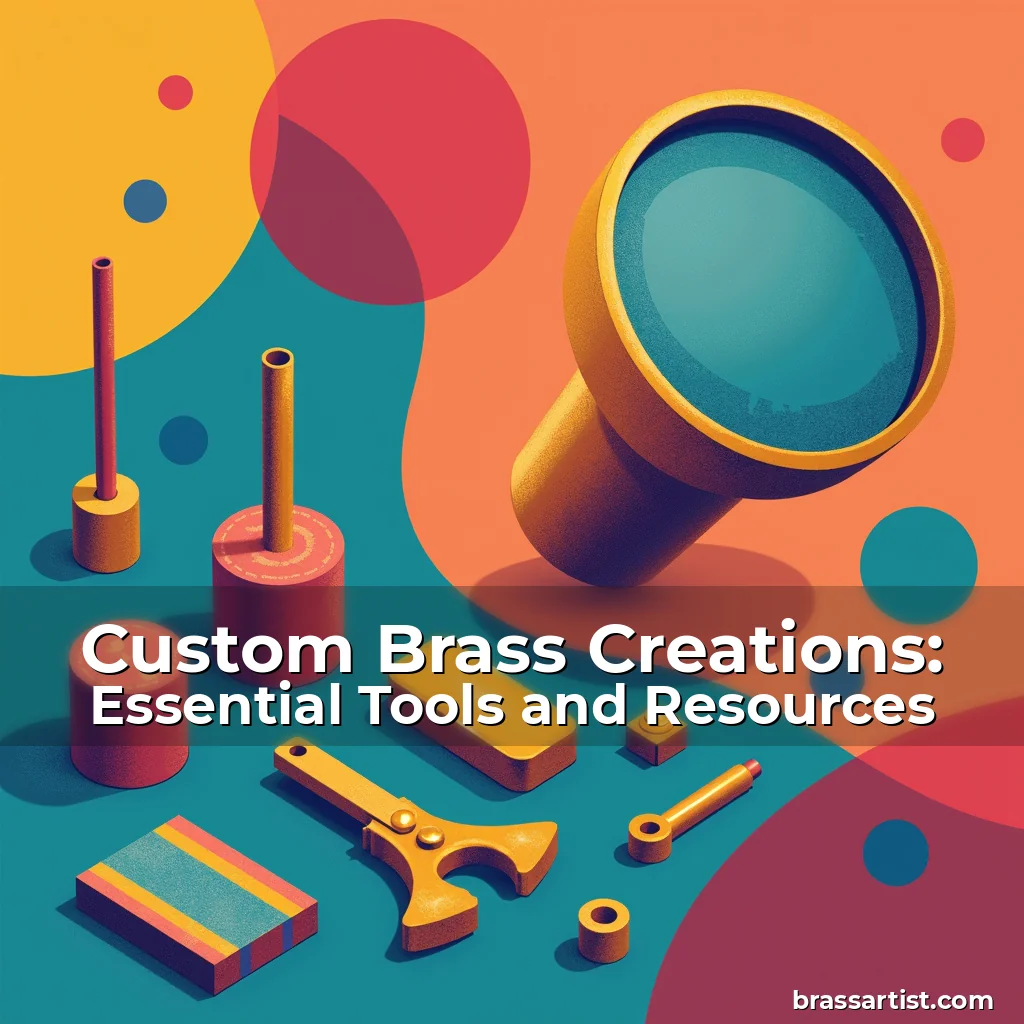
Tools of Mastery: Essential Equipment for Advanced Brass Work
A well-equipped workshop dedicated to custom brass creations necessitates investment in specialized machinery designed for precise material handling. Among these essential tools includes lathe machines capable of spinning raw brass stock to produce symmetrical profiles—ideal for creating everything from ornate jewelry settings to industrial components requiring tight tolerances.
Different types of lathes serve distinct purposes within a professional environment. While entry-level models suffice for basic turning tasks associated with small-scale projects, multi-axis CNC lathes enable automated machining operations perfect suited towards replicating elaborate geometric patterns found in fine art commissions.
Note: Always prioritize safety protocols when operating any type mechanical equipment involved in brass crafting—it’s crucial not only for protecting oneself but also ensuring long-term viability of costly instruments employed frequently throughout creative endeavors.
Besides lathes, welders play another critical role across diverse applications spanning structural reinforcement needed within larger installations up through delicate joinery required for assembling micro-engineered mechanisms housed inside sculptural pieces containing moving parts.
The choice between gas tungsten arc welding (GTAW) versus MIG welding depends largely upon desired outcome characteristics regarding aesthetics versus strength requirements respectively. GTAW produces cleaner seams preferable for visible joints whereas MIG provides quicker assembly times beneficial during rapid prototyping phases typical early stage development cycles.
Specialized tool kits tailored specifically for brass modification include chisels crafted from hardened steel alloyed with cobalt compounds enabling enhanced resistance against wear caused frequent contact during engraving sessions. These same tool sets usually incorporate rasps shaped ergonomically facilitating controlled material removal necessary achieving smooth transitions between contrasting textures characteristic successful visual narratives told via metallic surfaces.
Certain niche areas benefit greatly from incorporating laser cutters which offer remarkable accuracy when slicing sheets thin enough remaining pliable yet firm sufficient maintaining structural integrity post-processing steps involving bending procedures applied subsequently forming three-dimensional structures based flat layouts
Custom Brass Creations: Unleashing Artistic Possibilities Through Precision Craftsmanship
In an era where artistic expression is increasingly intertwined with technological innovation, custom brass creations stand at the intersection of tradition and modernity. Artists and creative professionals are discovering new ways to harness the inherent beauty and versatility of brass through bespoke metalwork that transcends conventional boundaries. Whether in sculpture, decorative arts, architectural elements, or functional design objects, brass offers unparalleled opportunities for transformation.
The resurgence of interest in artisanal craftsmanship has led many creators back to the time-honored practice of working with metal. Custom brass creations allow for unique personalization that mass-produced items simply cannot achieve. By exploring various techniques—from traditional casting methods to contemporary laser cutting—artists can push their creativity further than ever before while embracing sustainable materials and eco-conscious production practices.
Evolving Techniques in Brass Metalworking
Brass metalworking is undergoing continuous evolution as artists experiment with both historical methodologies and avant-garde approaches. Traditional techniques such as lost-wax casting provide a tactile connection to ancient crafts while allowing intricate detailing that would be difficult to replicate using digital fabrication tools. Meanwhile, modern CNC machining enables unprecedented precision when creating complex shapes from solid blocks of brass.
One notable trend among contemporary metalsmiths involves blending subtractive and additive manufacturing processes. This hybrid approach allows for greater flexibility by combining hand-forged components with digitally fabricated parts. Artists often use CAD software to model highly detailed pieces before employing robotic arms or 3D printers specifically adapted for metal powders—a technique known as direct metal laser sintering (DMLS).
Surface treatment plays an equally vital role in shaping the final appearance of custom brass works. Electroplating allows for finishes ranging from polished gold tones to deep gunmetal shades depending on what chemicals are used during the process. Anodizing adds durability without compromising aesthetic appeal, making it particularly popular for outdoor installations or high-touch surfaces.
Tips: When experimenting with surface treatments, always consider how different environments will affect your work over time. Outdoor pieces may require additional protective coatings beyond standard electroplating alone.
- Consider consulting local metalworking guilds for workshops focused on emerging technologies applicable to brass manipulation.
- Leverage open-source communities online where experienced artisans share tutorials on advanced surface finishing techniques suitable for various project scales.
- Explore partnerships with engineering firms specializing in prototyping services; they can help translate conceptual designs into viable physical forms efficiently.
Essential Tools and Equipment for Advanced Brass Work
A well-equipped workshop dedicated to custom brass creations necessitates investment in specialized machinery designed for precise material handling. Among these essential tools include lathe machines capable of spinning raw brass stock to produce symmetrical profiles—ideal for creating everything from ornate jewelry settings to industrial components requiring

news is a contributor at BrassArtist. We are committed to providing well-researched, accurate, and valuable content to our readers.