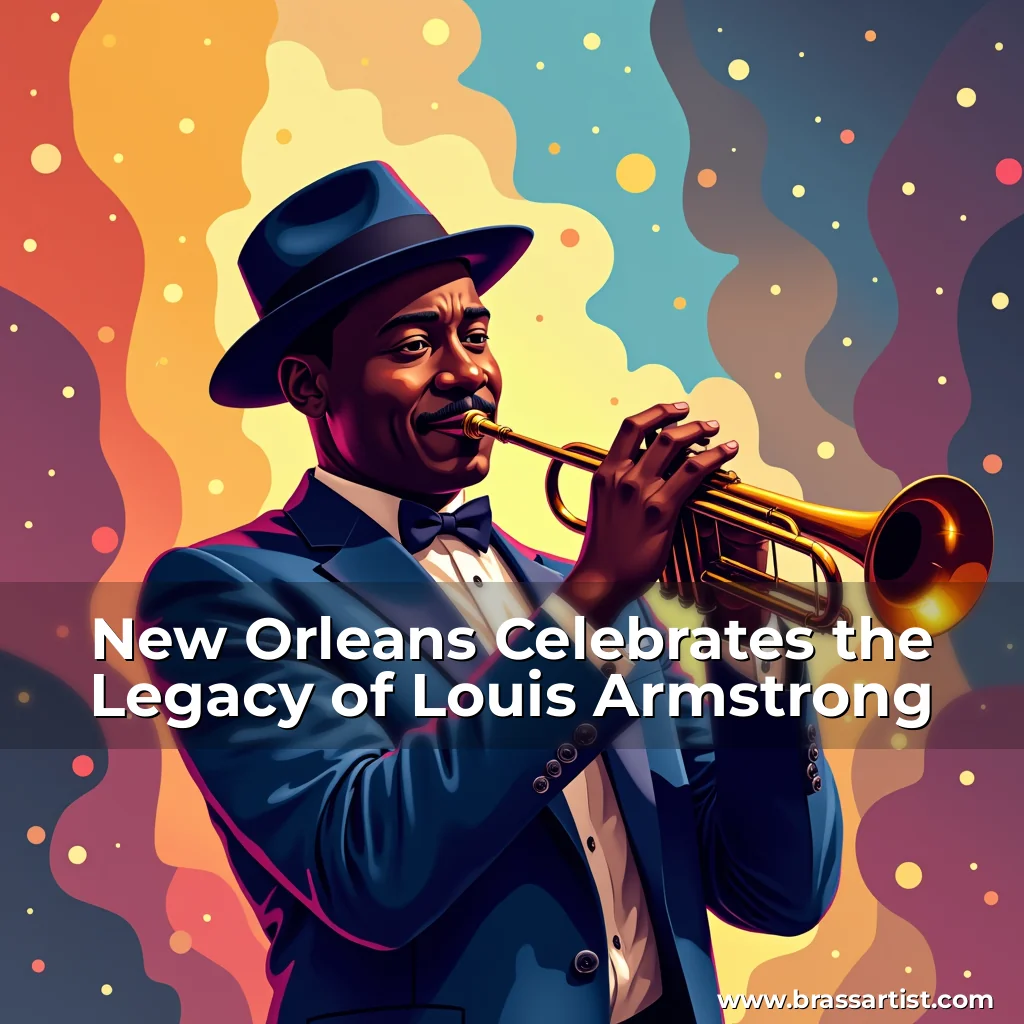
On a sunny Sunday in late August, the streets of New Orleans came alive with the sounds of jazz, as the city celebrated the life and legacy of its beloved son, Louis Armstrong. The festivities, which marked the 25th anniversary of Satchmo Summerfest, were a testament to the enduring power of jazz and the impact that Armstrong had on the city and its people.
The Importance of Music in New Orleans Culture
“We cannot live without music,” said Rev. Quentin Moody, a longtime member of St. Augustine Catholic Church. “That is a definitive statement.” Music has always been an integral part of New Orleans culture, and Louis Armstrong was at the forefront of that movement.
- The city’s unique musical heritage was shaped by Armstrong’s innovative style, which blended traditional jazz with blues and gospel influences.
- His iconic trumpet playing and gravelly vocals helped to define the sound of jazz in the 20th century.
- The impact of Armstrong’s music can still be heard in the city’s vibrant jazz scene today.
A Homecoming Celebration
St. Augustine Catholic Church, Armstrong’s former home parish, was the site of a special celebration on Sunday. Dozens packed into a makeshift chapel to pay tribute to the legendary musician.
“I think this is a festival that should be going on all the time, not just once a year,” said New Orleans jazz singer Charmaine Neville. “He did so much for this city, not just the music, and how many of us are playing music just because of him.”
Outside, a second line parade wound its way through the streets, featuring steppers and Baby Doll Ladies dancing to the rhythms of brass bands.
- Steppers, clad in colorful costumes, danced through the streets, their energetic movements bringing joy to the crowds.
- Baby Doll Ladies, a group of young women dressed in elaborate outfits, added to the festive atmosphere with their playful antics.
- The parade was a testament to the city’s rich cultural heritage and the enduring power of jazz.
A Display of Crescent City Culture
The festival, which took place at the New Orleans Jazz Museum, was a display of the city’s unique cultural identity.
- Music
- A key component of the festival was the music, which featured performances by local jazz musicians and a variety of genres.
- Cuisine
- The festival also showcased the city’s famous cuisine, including beignets, gumbo, and jambalaya.
- Culture
- The festival was a celebration of the city’s rich cultural heritage, featuring traditional dance, music, and art.
A Lasting Legacy
“The music of Mr. Armstrong lives on, because music is ageless,” said Rev. Quentin Moody. “It’s a blessing to grow up in a culture like this. And this is just how we live everyday.”
As the festival came to a close, tourists and locals alike marveled at the city’s vibrant culture and the impact that Armstrong had on its people.
| Some notable quotes | Rev. Quentin Moody: “We cannot live without music.” | Charmaine Neville: “He did so much for this city, not just the music.” |
A tourist, who had stumbled upon the second line parade by chance, was amazed by the experience.
“It’s amazing,” he said. “The first time I’ve seen something like that.”
A City Without Armstrong
Without Louis Armstrong, New Orleans would be a much different city. The legendary musician’s influence can still be seen in the city’s vibrant jazz scene today.
- The city’s jazz musicians continue to draw inspiration from Armstrong’s innovative style.
- The jazz clubs and venues that Armstrong helped to establish are still thriving today.
- The city’s cultural festivals, such as Satchmo Summerfest, continue to celebrate Armstrong’s legacy.
A Home Away From Home
For some, the city is a home away from home, a place where they can escape the stresses of everyday life and find solace in the city’s rich cultural heritage.
“No matter where I am in the world, all roads lead back to New Orleans,” said Alana Harris, whose father founded the parade. “It’s a blessing to grow up in a culture like this.”
The city’s unique cultural identity is a source of pride for many, and the celebration of Armstrong’s legacy is a testament to the enduring power of jazz and the impact that the musician had on the city and its people.
The Enduring Power of Jazz
“The music of Mr. Armstrong lives on, because music is ageless,” said Rev. Quentin Moody. “It’s a blessing to grow up in a culture like this. And this is just how we live everyday.”
As the festival came to a close, the sounds of jazz continued to fill the air, a reminder of the enduring power of music and the impact that Armstrong had on the city and its people.